Roof Replacement
Comparing materials and approaches for Roof Replacement? Start with the overview below, which covers the stages, the materials and the questions to ask.

Roof Replacement: what to know
Replacing a roof is a major project, and it deserves a clear plan before any work starts; it is easier to plan on your own schedule than in the middle of a leak. Widespread wear across several slopes is the clearest sign that a roof needs replacing; bald patches in the gutters tell you where granules went. A roof that is near the end of its expected life should be inspected more often; the right time to plan a replacement is before leaks begin. Matching or changing the covering should be a decision, not an accident; heavier ones need a deck and structure that can carry them.
Frequent repairs in different spots add up to a pattern worth taking seriously; the answer should come with evidence, not pressure. Removing old layers exposes damaged boards, rotted sections and failed fasteners; the extra layers of old roofing add weight that snow loads can magnify. A different covering can change the look and the maintenance needs of the building; think about snow retention and walkways where they are needed. Cosmetic stains, light moss and minor granule loss are not reasons by themselves to replace; ask for photos of what is actually failing. Details around penetrations are where old roofs fail first; skylights that are near the end of life should be replaced now.
What affects the replacement job is the roof's size, shape and condition; the covering you choose changes the labor and the schedule. Most replacements take a few days once the crew starts, but weather can add time; plan for a long day on the first day of tear-off. Old roofing is heavy, and dumpsters need a level place close to the work; check that gutters and drains are clear when the crew leaves. Historic districts often restrict materials and appearance; color samples may need sign-off before ordering. Confirm the product and color on the order before it is placed; ask when materials will arrive. Living in the building during a replacement is possible and usually safe; a quick check of the ceilings afterward is wise. Phasing spreads the work across a season and reduces disruption for tenants; occupants should be told about noise and parking changes ahead of time. Crews usually remove, inspect and dry in each section before moving to the next; a good crew keeps the deck covered overnight.
A successful replacement leaves a dry, quiet and handsome roof; the gutters flow freely and the yard is clear. Photos of the deck and the details before they were covered show the quality of the work; the first inspection after a season shows how the roof is settling in. A local inspection may be required before the job is considered complete; ask for the product list and the layout of layers. The Roofing Company can help property owners decide between repair and replacement and explain each step of a replacement; ask for the scope in writing, including decking, underlayment and flashing.
What our Roof Replacement work covers
How our Roof Replacement work goes
- Look over the whole roof system The contractor walks the roof, or surveys it by other safe means, and checks the surface, the flashing and the penetrations; attic or interior checks look for stains, damp insulation, daylight and poor ventilation; gutters and drainage at the roof edge are included in the walk-over; findings are shared in plain words and with photos.
- Work out the approach and the materials Repair, restoration and replacement are weighed against the condition of the roof and the plans for the building; a written plan lists what will be removed, what will be installed and what will be repaired; access for equipment, dumpsters and deliveries is planned in advance; colors are checked against the trim in natural light.
- Remove, repair and install Flashing at walls, chimneys, vents and valleys is set before the roof covering goes on; the installation follows the product instructions, which matters for both performance and appearance; pipe boots, vents and accessories are replaced at the same time as the covering; the work area is kept clear of tools and scraps.
- Walk through the finished roof The contractor checks that the drainage works and that the gutters are clear of debris; the owner is shown what was done and what to watch for in the seasons ahead; any touch-up of paint, sealant or trim is finished on site; a few matching spare pieces can be left with the owner if wanted.
Roof Replacement options and materials
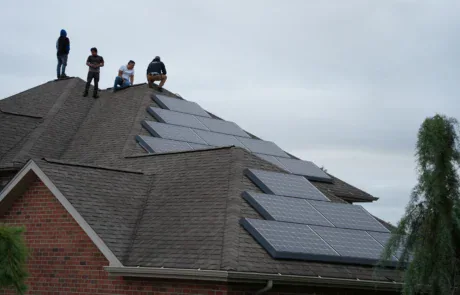
Solar roofing
Solar tiles replace part of the roof covering, while panels are mounted on a racking system above it; if the roof is near the end of its life, replacing it first is worth discussing; roof age is considered, since removing panels later adds work.
Slate and synthetic slate
Synthetic slate is made from recycled rubber or polymer blends molded to look like natural stone; a contractor can show samples and explain the differences between products; synthetic tiles are lighter and easier to handle.
Wood shake roofing
Natural wood adds character that few synthetic materials can match; treatments and underlayment details influence how the roof performs; moss and algae need to be brushed off to extend service life.
Rubber and bitumen flat roofing
EPDM is a durable synthetic rubber membrane, usually black, that is common on flat residential and commercial roofs; modified bitumen can be torch-applied, self-adhered or cold-applied, and each method has its own safety and fit; black membranes absorb heat while white ones reflect it.
TPO roofing
TPO and PVC are single-ply membranes rolled out across a low-slope roof and welded at the seams; flashing at walls, drains and penetrations is where leaks tend to start on a flat roof; membranes are available in white, tan and gray.
What customers say
John and his crew were extremely professional! They provided detail pictures of all roof angles with a drone and showed us specifically which areas were slightly and/or severely damaged, both from the recent storm as well as just being 20 years old. They removed and replaced the roof quickly, neatly and with no...
Our roof was damaged when a tree fell on it during the recent storms. I contacted multiple companies and John was the only one that appeared willing to do the repairs. It is a high metal roof and there was structure damage as well, not just roof panels. He was great at providing assistance with the insurance process....
I can say that the experience was 5 Star!⭐️ John and his roofing crew did an amazing job. I had high expectations and they nailed it! I addressed my concerns from prior experiences and he listened and delivered! And on top of that his crew was top notch. They came at 7am and were done by 12:30pm! I highly recommend...
The Construction Company Collective is the best. The Roofing and Construction companies do fantastic work and are fantastic people. John and team worked with us to provide a design we loved, made difficult decisions easy for us, and delivered results above our expectations. 100% recommend to a friend.
They did a quick, and fabulous job on my aunt’s roof.
We used John and The Roofing Company to replace our roof before the summer. They showed us the Atlas shingles and we went with the hearthstone color. They removed the old roof and put the new one on all in one day which was great. We love how it looks and will be calling them for siding next year
Common questions about Roof Replacement
Can a damaged roof be fixed, or does it need replacing?
A handful of damaged pieces can be replaced without touching the rest of the roof; a close inspection of the roof is a good way to tell the two situations apart; a leak that keeps coming back in the same spot suggests the repair is not reaching the cause.
What are common warning signs of roof problems?
Granules collecting in the gutters, moss growth and loose flashing are further warning signs; an inspection can tell whether the issue is cosmetic or structural; photos taken from the ground can help track changes over time.
How does flashing protect a roof?
Flashing seals the transitions in a roof, where the main covering cannot do the job alone; a contractor can explain how each transition will be flashed; sealants are a temporary measure unless backed by proper metal.
How does airflow affect my roof?
A balanced system moves air through the attic, from the eaves to the ridge; ask how ventilation will be handled in any proposal for a new roof; soffit vents bring air in at the eaves and ridge vents let it out at the top.
How is a flat roof different from a pitched roof?
Standing water is a particular concern on flat roofs, since it speeds up wear and increases the risk of leaks; repairs are often done in sections, and the membrane type determines the method; slight slopes are built into the structure to guide water to the drains.
What are the first steps when a roof leaks?
Start by limiting the damage inside: move furniture, catch the water and photograph the affected area; prompt attention keeps small leaks from becoming large repairs; wet insulation should be dried or replaced after the leak is stopped.
Areas we serve for Roof Replacement
We provide Roof Replacement across 11 areas.
- Allegheny County Pennsylvania 412-858-8858
- Jefferson Hills Pennsylvania 412-858-8858
- McKeesport Pennsylvania 412-858-8858
- Monroeville Pennsylvania 412-858-8858
- Murrysville Pennsylvania 412-858-8858
- North Huntingdon Pennsylvania 412-858-8858
- North Huntingdon Township Pennsylvania 412-858-8858
- Penn Township Pennsylvania 412-858-8858
- Plum Pennsylvania 412-858-8858
- West Mifflin Pennsylvania 412-858-8858
- Westmoreland County Pennsylvania 412-858-8858
Our other services
Roofing
- Commercial Roofing
- Flat Roofing
- Metal Roofing Installation
- Roof Inspection
- Roof Installation
- Roof Maintenance
- Roof Repair
- Roofing
- Roofing Company
- Shingle Roofing Installation
- Solar Roofing
- Tile Roofing Installation
- Wood Shingle Roofing Installation
Gutters
Siding
Windows
Make a plan that fits your building
A thorough estimate covers what will be removed, installed and repaired; reach out to The Roofing Company when you are ready to see the options laid out; the estimate lists the work in plain terms.